
The book
Why was the Book of Enoch removed from the Bible?
Quoted by name in the New Testament, treasured by the early church, preserved in Ethiopia, and rediscovered through the Dead Sea Scrolls. The story is not that Enoch disappeared — it is that one of the ancient world's most important books survived.
The short answer
There was no single moment when someone removed the Book of Enoch from every Bible. Different Jewish and Christian communities received and organized their sacred writings in different ways. As the Western canon took shape, Enoch was not included in the Old Testament used by those churches — while the Ethiopian Orthodox Church preserved the complete book as part of its Bible.
That history is exactly what makes Enoch so compelling. It was read and respected by early Christians, quoted by name in the New Testament, preserved in Ethiopia for centuries, and later confirmed as an ancient Jewish work when Aramaic copies were found among the Dead Sea Scrolls. This is not a forgotten modern curiosity. It is a surviving witness from the world of the Bible.
Wasn't it quoted in the New Testament?
Yes — by name. The letter of Jude, verses 14–15, quotes the Book of Enoch directly: “Behold, the Lord cometh with ten thousands of his saints…” That line is Enoch 1:9, almost word for word.
Enoch's visions also help illuminate the world of ideas surrounding the New Testament: the Watchers, the heavenly court, final judgement, the righteous one, and the coming kingdom. Reading Enoch lets you encounter the ancient background behind passages many readers have known for years.
So why was it left out?
- Different communities formed different canons. The Western churches built their Old Testament around the Hebrew Scriptures, while the Ethiopian Orthodox Church preserved Enoch within its own ancient biblical tradition.
- The book belongs to the world of Second Temple Judaism — the same broad world whose writings and communities shaped the setting of the New Testament. Its ancient prophetic voice is presented through Enoch, the seventh from Adam.
- Its visions are bold: heavenly journeys, the Watchers, the Nephilim, divine judgement, and the hope of a righteous kingdom. That vivid material is part of the reason generations of readers have continued to return to it.
- Over time, Enoch became difficult to find in the Greek and Latin-speaking West, but it was never lost everywhere. The Ethiopian Orthodox Church kept the complete text in Ge'ez, protecting a book that other traditions no longer had in full.
Didn't the early church treat it as Scripture?
Many did. Tertullian called it Scripture and defended it. Other early Christian writers cited it with respect, and Jude preserved one of its most memorable prophecies in the New Testament. Enoch's place in the Ethiopian Orthodox canon is even stronger: the complete book remains part of that living biblical tradition today.
In the Western churches, Enoch gradually became harder to find as the canon and the manuscript tradition took different paths. That is different from proving the book false or unimportant. It means that one tradition carried it forward while another no longer kept it in its standard collection.
How did it survive at all?
In Ethiopia. The Ethiopian Orthodox Church kept the complete book in Ge'ez — the classical Ethiopian liturgical language — and counts it as canonical to this day. It is the only church that does.
The outside world got its first good look in 1773, when the Scottish explorer James Bruce brought back three manuscripts. A hundred and twenty years later R. H. Charles produced the first critical translation, and Enoch returned to the conversation it had left a millennium before.
Then, in the twentieth century, something remarkable happened: fragments of the book turned up among the Dead Sea Scrolls — Aramaic copies a thousand years older than the Ethiopian manuscripts, buried since before the Gospels were written. The Qumran caves proved that Enoch was old, widespread and treasured by the very community that preserved the oldest Scriptures we have.
Is it in any Bible today?
| Tradition | Status of 1 Enoch |
|---|---|
| Ethiopian Orthodox | Canonical — full book, part of the Old Testament |
| Roman Catholic | Outside the standard canon; valued as ancient Jewish literature |
| Eastern Orthodox | Outside the standard canon; quoted with respect in older literature |
| Protestant | Outside the standard canon; widely read in study editions |
| Judaism | Outside the standard canon; preserved through Second Temple literature |
Where 1 Enoch stands in the major traditions.
Read them and see
Whatever you conclude about their status, these books are among the strangest and most vivid things to survive from the ancient world — heaven's treasuries of wind and hail, the fallen Watchers, the calendar of creation, the stories of the patriarchs, and journeys beyond the edge of the world. They deserve to be read whole, not in fragments or scattered excerpts.
Our edition brings together three complete ancient books: 1 Enoch — all 108 chapters; the Book of Jubilees — all 50 chapters; and the Book of Jasher — all 91 chapters. That's 249 chapters across three cloth hardcovers — 773 printed pages — or all three as instant PDFs. Have a look at the edition page for what's inside.
Own the complete text
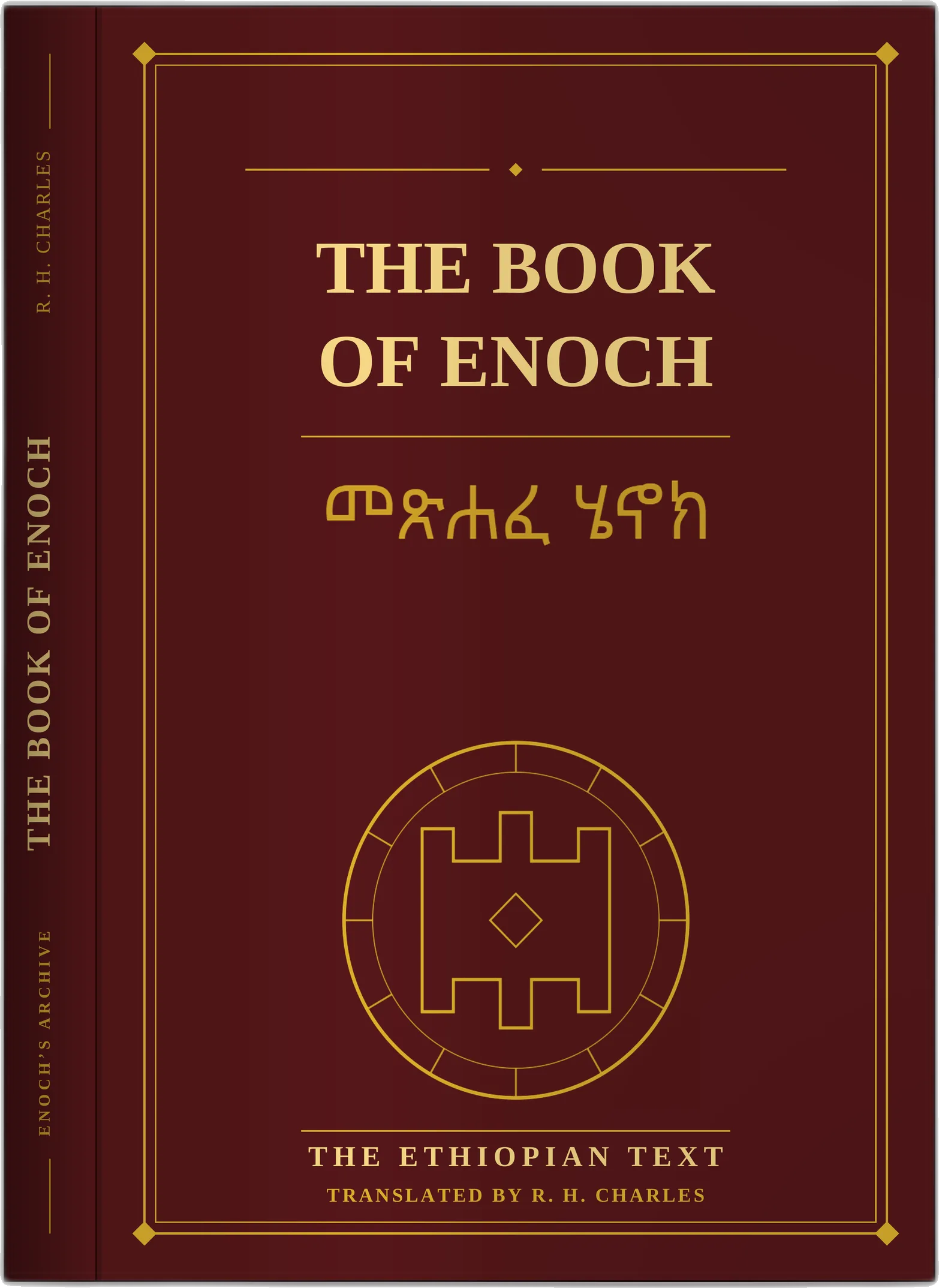
The Book of Enoch, hardcover — $44.99
All 108 chapters in the R. H. Charles translation. Free ebook included with every hardcover, so you can read tonight. Free US shipping on the hardcover.